My blog is reader-supported. When you buy through links on my site, I may earn an affiliate commission.
This post was originally published via Substack on June 9, 2024.
Getting back into a creative routine
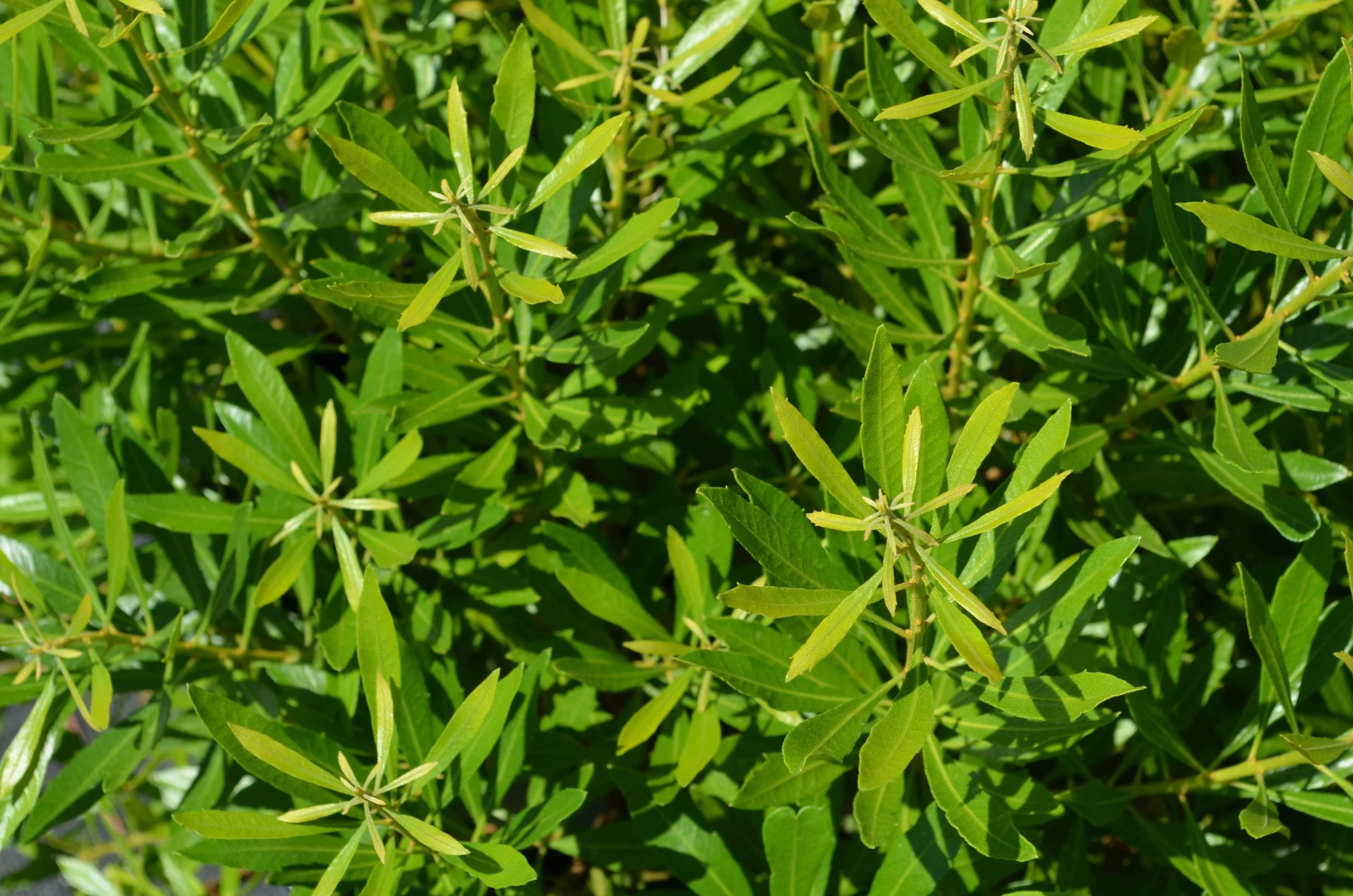
The wax myrtles (Myrica cerifera) outside my house have more than doubled in size since last year. Every time I take the dog for a walk, I marvel at how quickly they shot up and expanded from the little two-foot transplants that dotted along the sidewalk last spring. They are at least as tall as I am now — and while that’s not incredibly high at 5’ 1”, it’s impressive that they have grown so well. And perhaps it shouldn’t be a surprise given that wax myrtles are a native plant here in southeastern North Carolina. They are in the prime environment to thrive.
This summer has felt a bit like trying to find my own environment to thrive in. We’re now several weeks into “break” and I’m finally finding a flow that works on most days. Don’t get me wrong — that first week or so after wrapping up the spring semester was brutal. I felt run down and completely uninspired (and my body was reminding me, gently, to rest). I spent a good bit of time trying to suss out just what I wanted to focus on with the greater freedom I had to my schedule. When those things started to click into place, it became easier. I’m learning not to force the work.
One of the chapters I’m working on in my current book project deals with the intersection of slavery and households. I’m finding that I’m having to dig extra hard into the archive and read against the grain to better understand the experiences of Black men and women in North Carolina whose lives were circumscribed by strict social and legal codes. A source that has provided some small insight into the forced movement of enslaved people is a letterbook kept by a merchant partnership that worked between Charleston, Wilmington, and Bristol, among other locations in the Carolinas, Caribbean, and Britain. In one entry, the company notes how in payment for sailcloth, the merchants hoped their Wilmington contact would send them “Deer Skins, Tallow, Bees & Myrtle Wax & Candles.”
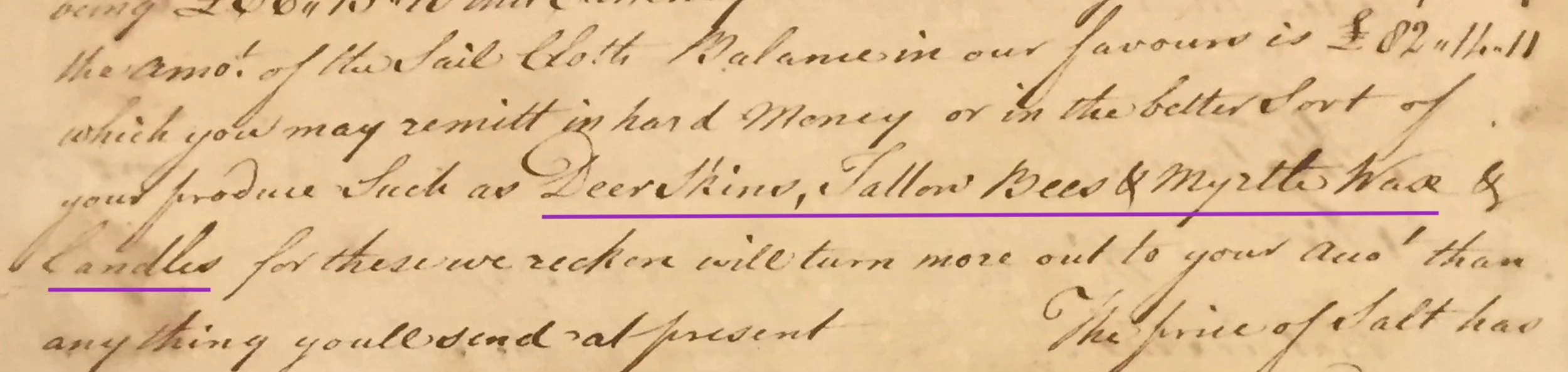
Each of these items shows how interconnected the Atlantic world could be. Deer skins, many of which were harvested and processed by Indigenous and white hunters in the backcountry, would be shipped out to Europe for a variety of uses. Candles and wax made from tallow, beeswax, and the wax myrtle (which grew plentifully throughout the sandy coastal plains and swampy lowlands) were in need for sealing items, lighting lamps, greasing machinery, and more. The wax harvested from the myrtles created smokeless, brittle candles, but their lack of greasiness meant they lasted better in the warm summer months. Its aromatic leaves were brewed up in teas or used as a substitute for bay leaves in adding flavor to cooking. Their roots and wax could be stored and used in a variety of remedies for everything from gastrointestinal issues to itchy skin. Would the wax myrtle have been used or harvested by the enslaved people whose stories I am seeking? It’s very probable.
Every day that I sit down to read an archival source or sort out my thoughts in writing on what I’m finding is a day that I can continue to hone my craft as a historian. It doesn’t necessarily make it easier, but it sharpens things into focus the more that I “practice.” Perhaps it’s a bit like those routines that Mr. Miyagi had Daniel repeat in The Karate Kid. Wax on, wax off. Sit down, do the work, repeat.
Currently
What I’m reading: The Secret Life of Fungi by Aliya Whitely
What I’m listening to: Dan Schreiber’s We Can Be Weirdos podcast (as usual ☺️)