Disclaimer: This post contains affiliate links. My blog is reader-supported. When you buy through links on my site, I may earn an affiliate commission.
If you know me, you know I love a spooky story, a haunting bit of folklore, that foreboding sensation that creeps down your spine (as long as it’s in the safe confines of watching a film or reading book). This summer I fell head over heels for the AppleTV series Widow’s Bay. Not only does it have a fantastic cast and atmospheric locations, the series balances dark comedy incredibly well with the heartfelt and the horrific.
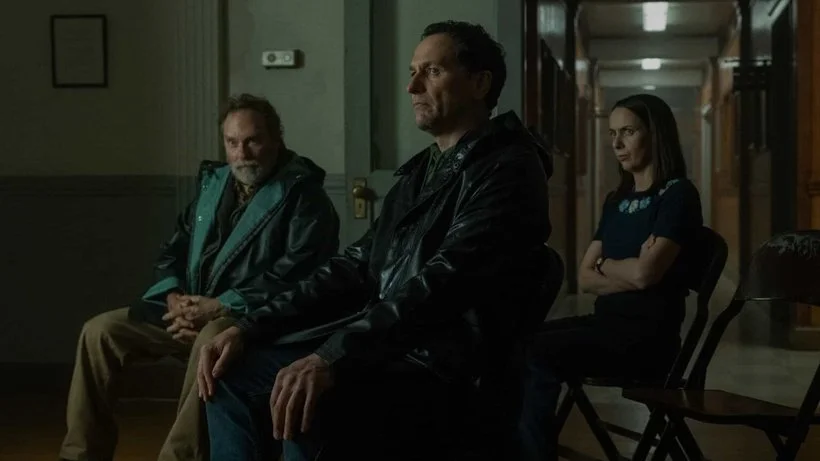
Wyck (Stephen Root), Tom (Matthew Rhys), and Patricia (Kate O'Flynn) form an unlikely team set out to break the curse Widow’s Bay.
A slight spoiler: Widow’s Bay is cursed. The island, some 40 miles off the coast of New England, is dealing with the ghosts of its past (in some cases, literally) and current mayor Tom Loftis (played by Matthew Rhys) is having none of it. When past and present collide, however, Tom and his neighbors realize there is more at stake.
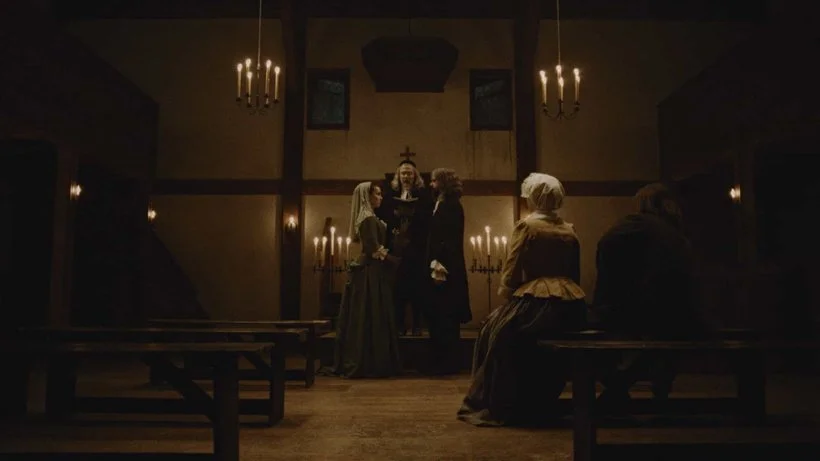
Despite the numerous nods to folk horror and classic pulp horror alike, what I found most chilling was the portrayal of 1702 Widow’s Bay in episode six “Our History” - a patriarchal, puritanical community in the tight grasp of is founding father, Richard Warren. Maybe that says something about my own religious trauma, but I also thought it would be the perfect theme for a “Five on a Friday” roundup. Here I’ll share five books on New England history—all of which I’ve taught in the classroom—that might give you that same chill as we await the next season of the show!
Lisa Brooks, Our Beloved Kin: A New History of King Philip’s War (2019)
I first taught Lisa Brooks’ Our Beloved Kin in my “Society and Culture in Early America” course and I was blown away by the intensive research and the richness of the narrative that she wove to tell this new history of King Philip’s War (1675-1678). The book weaves together the stories of Weetamoo, a Wampanoag woman and leader, James Printer, a Nipmuc scholar, and more well-known individuals such as Mary Rowlandson whose story of captivity sparked an entirely new genre of literature in the late seventeenth century. At once a microhistory and a regional history, Brooks reveals the wide-reaching implications of the “First Indian War” in New England. It’s also rooted in tribal history and indigenous scholarship, recentering our understanding of the conflict away from solely that of Anglo-Americans.
Carol F. Karlsen, The Devil in the Shape of a Woman: Witchcraft in Colonial New England (1998)
Karlsen’s The Devil in the Shape of a Woman is a favorite in the same course — an incisive look at gender, property, and legal rights in early New England. We might be pretty familiar with the story of Salem in 1692, but Karlsen widens the lens to examine cases of witchcraft trials all over seventeenth-century New England an entire generation before the town of Salem was rocked by the same allegations. What made these women vulnerable to charges of witchcraft? Karlsen explores how property disputes and patriarchal social structures made women and marginalized individuals the targets of men who craved power.
Mary Beth Norton, In the Devil’s Snare: The Salem Witchcraft Crisis of 1692 (2003)
Yes, of course I needed to include a book on Salem’s dark past on this list! There are too many references to Salem in Widow’s Bay not to. Mary Beth Norton is one of my favorite early American historians of women and gender. Her work on Salem doesn’t disappoint either. Over it’s pages, In the Devil’s Snare unpacks the religious cosmology of New England Puritans in the seventeenth century alongside their apprehensions and superstitions of living in a location that was, to them, “dark” and “savage.” Norton examines old theories (including the infamous ergot one) and places them on trial in favor of a new understanding of this crisis.
Laurel Thatcher Ulrich, Good Wives: Images and Reality in the Lives of Women in Northern New England, 1650-1750 (1991)
In terms of women’s history and social history in early America, there are few better examples of scholarship than Laurel Thatcher Ulrich. While her amazing work in A Midwife’s Talechronicles the diary of Martha Ballard, a midwife in late eighteenth-century Maine, it’s her work on Puritan women (goodwives) across New England that helps us understand how they fit into the world around them. And in case you didn’t know, Ulrich is the originator of the ubiquitous phrase “Well behaved women seldom make history”!
Gloria L. Main, Peoples of a Spacious Land: Families and Cultures across New England (2004)
Much of the subfield of social history that focuses on the family (at least in early America) originated in studies of Puritan New England. There are some worthy contenders here, including John Demos, Philip Greven, and the Mintzes, but Gloria Main’s Peoples of a Spacious Land deserves a mention. I’ve taught this one in my Atlantic Families graduate course because Main attempts to compare and contrast the family lives of both Indigenous groups in southern New England and Puritan colonists. It’s a great example of how historians use the “bread and butter” of family history archives—estate inventories, wills, court records, and personal writings—as well as the interdisciplinary work of ethnographers and anthropologists. If you ever wanted to know more about Puritans and topics like sex or death, this one’s for you.
BONUS: If you’re looking for a great historical fiction read that is densely-packed with historical research and that sense that something bad is going to happen, check out Chris Bohjalian’s Hour of the Witch. I read it as an audiobook via Libro.fm and loved it!
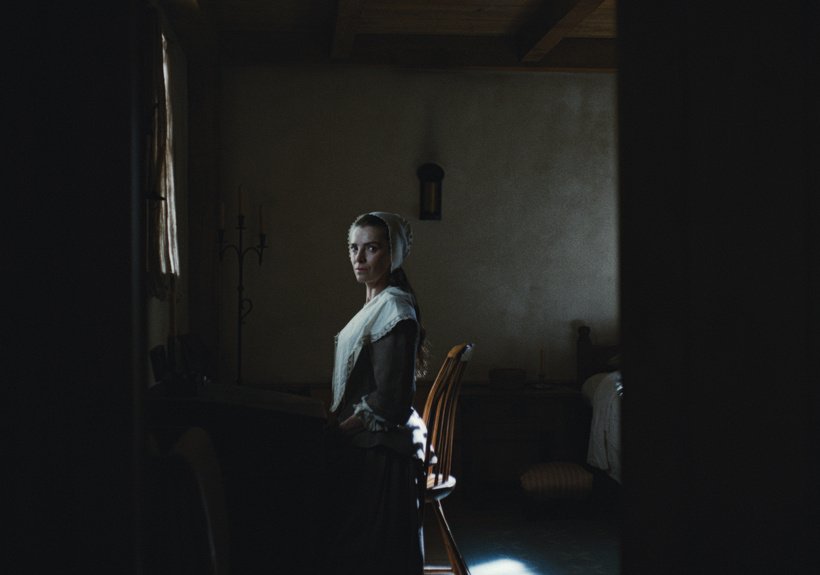
Betty Gilpin gives a standout performance as Sarah Warren in Episode Six “Our History"